
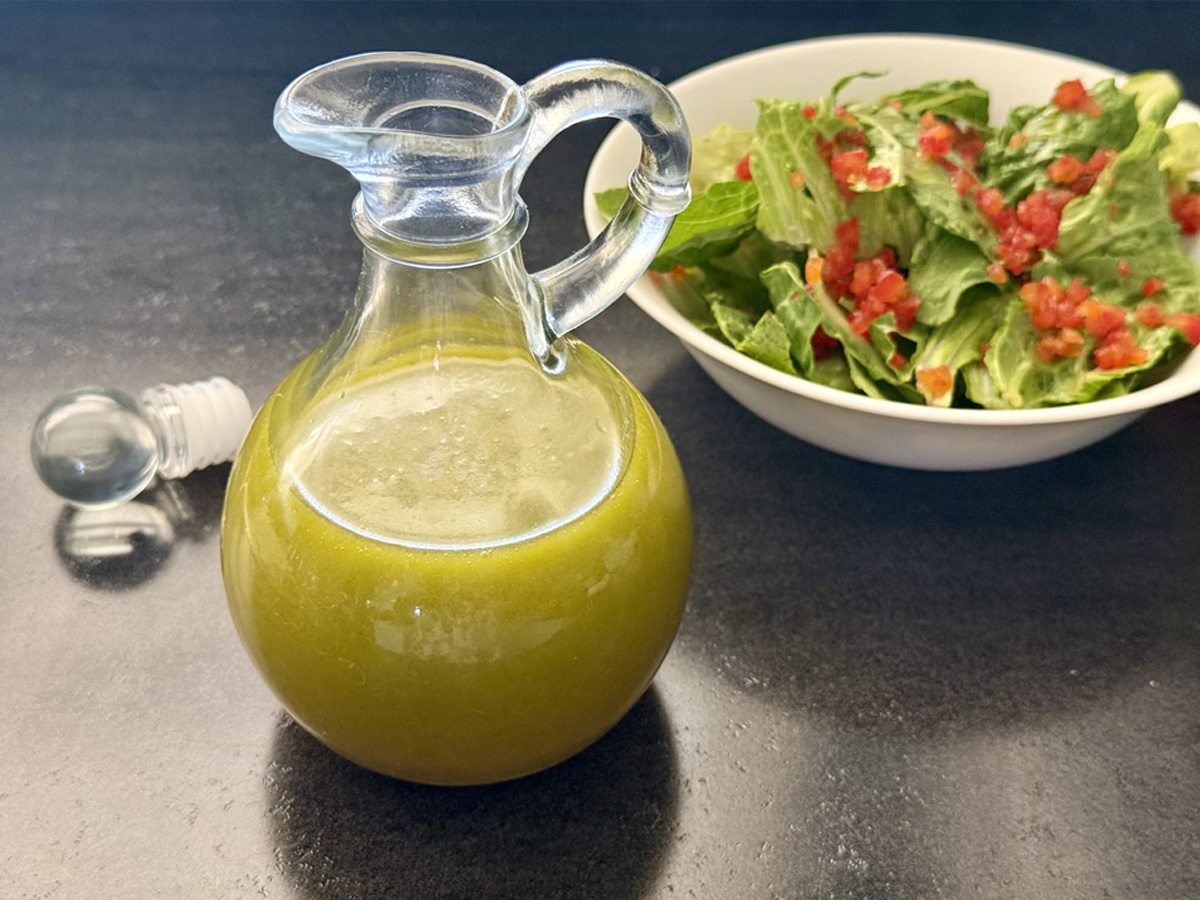
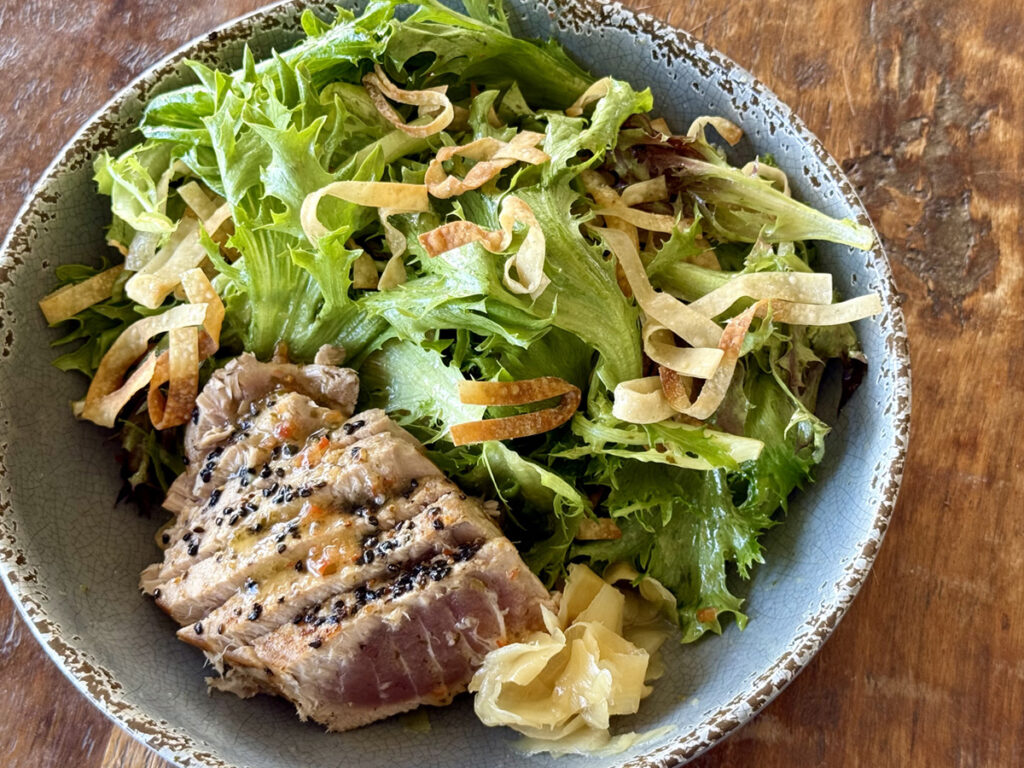
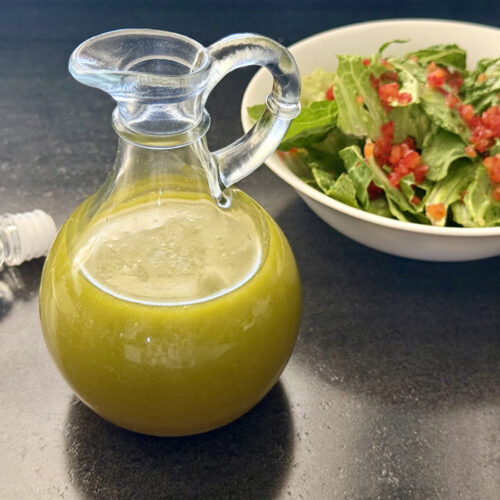
Asian-Inspired Citrus Vinaigrette contains bright citrus flavors and umami depth along with immune boosting ingredients like ginger and garlic. This vinaigrette pairs well with many proteins especially, chicken, fish, pork, and tofu—anything you’d like to give an Asian flair. I specifically developed this dressing to go with seared sushi-grade ahi tuna salad as well as chicken and mandarin salad both topped with crispy wantons for crunch.
Why these Dressing Ingredients Matter
Garlic releases sulfur compounds like allicin when it is crushed and allowed to sit for a few minutes. These compounds are associated with antioxidant and anti-inflammatory benefits and play a role in supporting overall health.
Ginger has long been used to support digestion and ease nausea—something I remember from being given ginger soda as a kid when I was sick. It also contains compounds with antioxidant, antimicrobial, and anti-inflammatory properties.
Cilantro is a nutrient-dense leafy green that can be surprisingly polarizing, as some people have a genetic predisposition that makes it taste soapy. Crushing the leaves may help soften that flavor for some, while still preserving their essential oils. See the recipe for cilantro oil below! The phytonutrients in cilantro can help reduce inflammation and vitamin K assists with cardiovascular health.
How to Make Cilantro Oil
- 1 bunch of cilantro (leaves and trimmed stems), about 1 cup
- 1 cup of olive oil, extra virgin
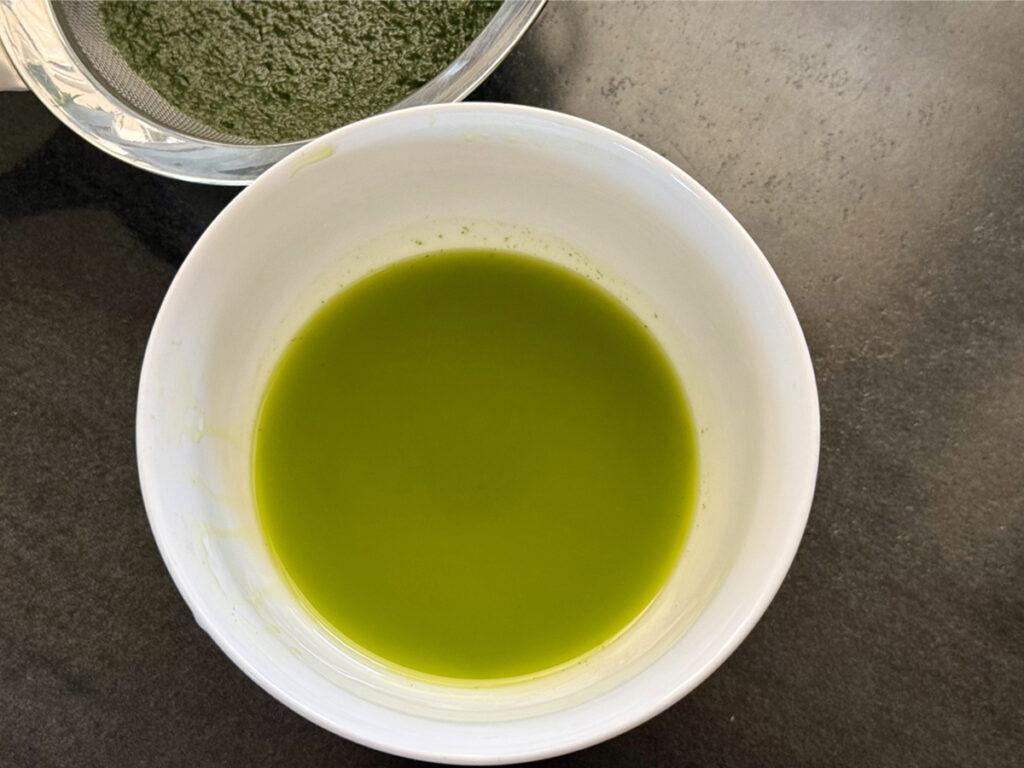
- Blend cilantro and oil together until well blended (I used my Vitamix pulsing in 10 second increments)
- Strain through a fine mesh sieve without pressing (just let gravity do the work).
- Save the solids in small portions for another use. I froze 1 tablespoon portions to use in soups, chilis, and taco prep.
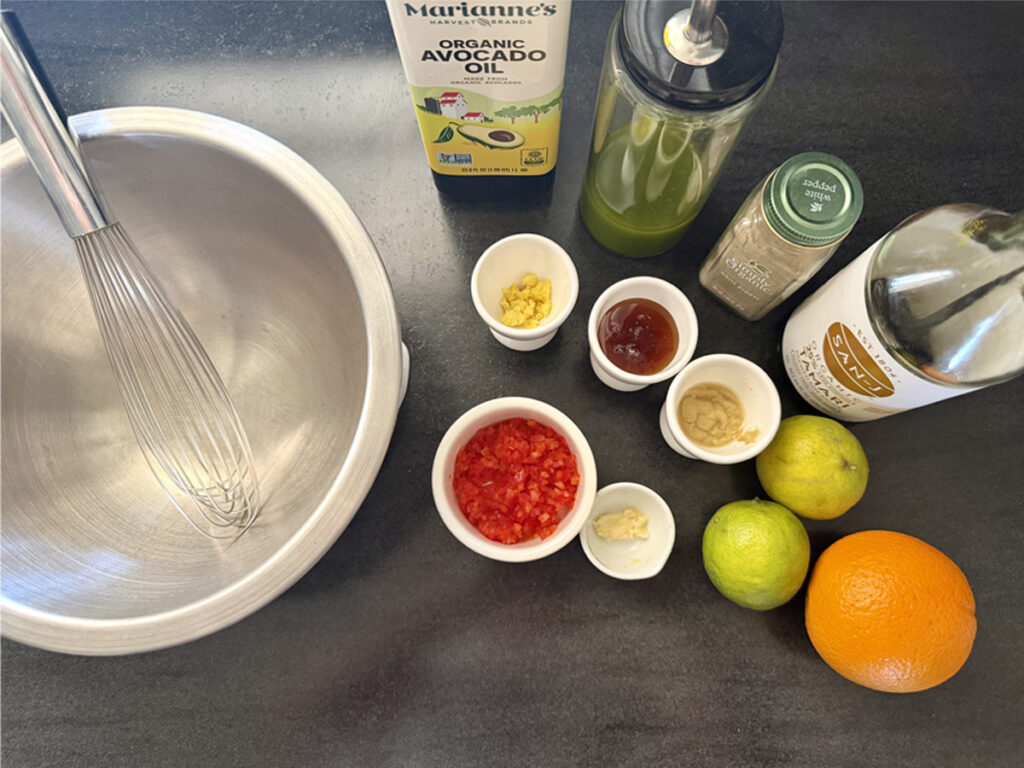
What You’ll Need for Asian Inspired Citrus Vinaigrette
zest of 1 lemon and 1 orange
3 tablespoons red pepper, finely minced (about 1/4 of the pepper)
2 tablespoons honey
2 teaspoons fresh ginger
2 teaspoons Dijon mustard
2 cloves garlic, creamed to paste
1 teaspoon low-sodium tamari
1 pinch white pepper, or more to taste
1/3 cup of lime and orange juice
2/3 cups cilantro oil, see recipe above (Variations: make parsley oil, Thai basil oil, or a combination in place of cilantro oil. Alternatively, simply use a good quality extra virgin olive oil and skip infusing the herbs)
salt to taste
How to make Asian-Inspired Citrus Vinaigrette
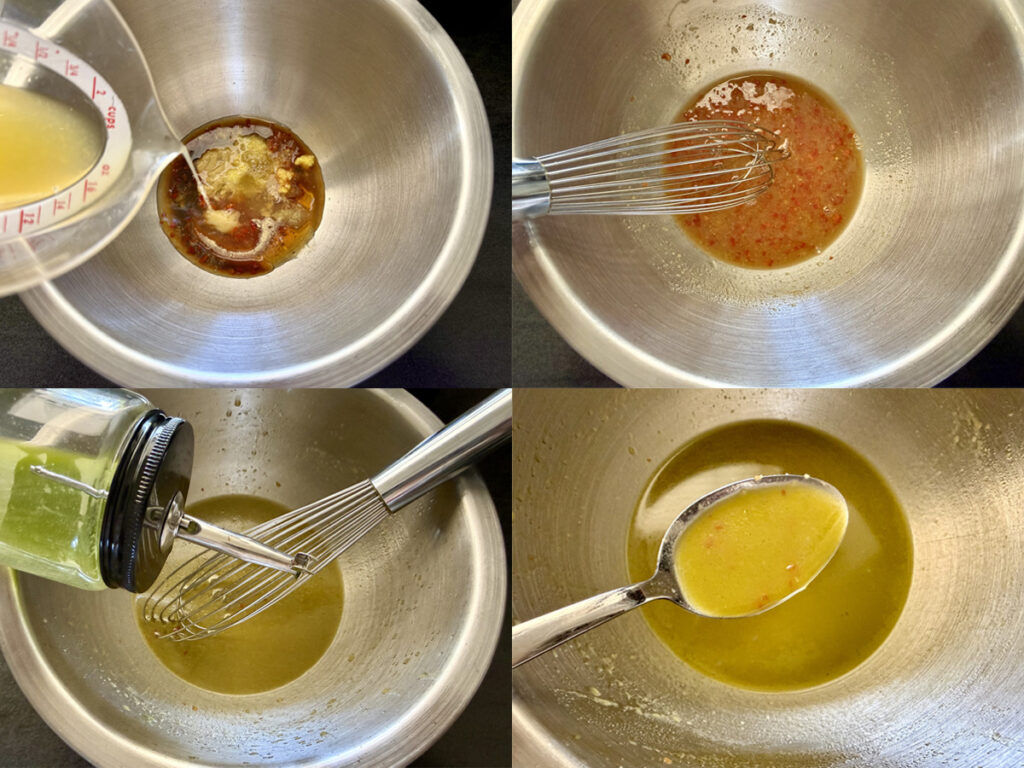
Place half of the zest (you can always add more later while tasting, but you can’t take it out once it’s in), red pepper, honey, ginger, mustard, garlic, tamari, white pepper, and citrus juice in a bowl large enough for whisking.
Begin by adding just a few drops of oil while whisking constantly. At first, the process will feel slow, and it may seem like nothing is happening. This is normal. If the oil is added too quickly, the dressing will not properly emulsify.
Continue adding the oil a few drops at a time, whisking for about 10 seconds between additions. After a couple of minutes, the mixture will begin to thicken. Once that base forms, you can gradually increase the flow of oil while continuing to whisk.
Emulsified vs. Shake-in-a-Jar Vinaigrette
I spent about 20 minutes whisking to achieve a thick, stable emulsion. This is a technique I learned in the Holistic Chef Program at Bauman College.
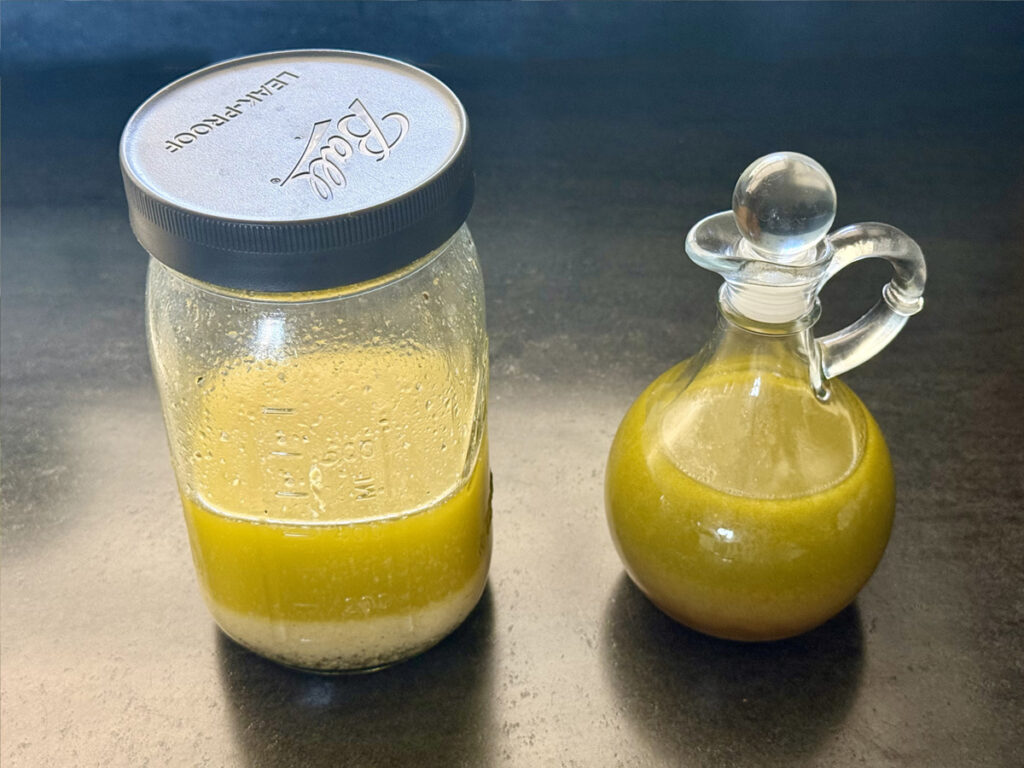
Yes, you can absolutely make this dressing by placing everything in a jar and shaking it—just like I do in my One-Minute Lemon Vinaigrette in a Jar. That method works well when you’re dressing a salad right away.
However, if you’re bringing a salad to share—or setting out multiple dressings for guests to choose from—an emulsified vinaigrette makes a noticeable difference. It stays cohesive, so each serving is balanced rather than separating into oil and acid.
This technique works by slowly incorporating the oil into the acid while whisking, using Dijon mustard as a natural emulsifier to help bind the mixture together.
The following image shows the difference between shake-in-a jar vs emulsified. After one hour the shaken vinaigrette was completely separated while the emulsified version was still holding together.
You Might Also Like
Caesar Salad Dressing (Outback Copycat)
How to Make the Best Dinner Salads
Asian Inspired Citrus Vinaigrette
Ingredients
For the Cilantro Oil
- 1 bunch cilantro ends trimmed (leaves and stems about 1 cup loosely packed)
- 1 cup olive oil
For the Dressing
- 1 whole lemon zested and juiced (keep juice and zest separate)
- 1 whole orange zested and juiced (keep juice and zest separate)
- 3 tablespoons red pepper finely minced (about 1/4 of the pepper)
- 2 tablespoons honey
- 2 teaspoons ginger freshly microplaned
- 2 teaspoons Dijon mustard
- 2 cloves garlic creamed to paste
- 1 teaspoon tamari low-sodium
- 1 pinch white pepper or more to taste
- 1/3 cup lime and orange juice
- 2/3 cups cilantro oil see recipe note
- salt to taste
Instructions
For the Cilantro Oil
- Blend cilantro and oil together until well blended (I used my Vitamix pulsing in 10 second increments)
- Strain through a fine mesh sieve without pressing (just let gravity do the work). Measure 2/3 cup for this recipe. Store the remaining in an airtight container in a cool dark place and use within 3 days. Or, store in the refrigerator as use within 60 days. Note: if stored in the refrigerator it will need to be brought to room temperature before use.
For the Dressing
- Place half of the zest (you can always add more later while tasting, but you can’t take it out once it’s in), red pepper, honey, ginger, mustard, garlic, tamari, white pepper, and citrus juice in a bowl large enough for whisking.
- Begin by adding just a few drops of oil while whisking constantly. At first, the process will feel slow, and it may seem like nothing is happening. This is normal. If the oil is added too quickly, the dressing will not properly emulsify.
- Continue adding the oil a few drops at a time, whisking for about 10 seconds between additions. After a couple of minutes, the mixture will begin to thicken. Once that base forms, you can gradually increase the flow of oil while continuing to whisk. Note: this process takes about 20 minutes. See alternative method in recipe notes.
- When oil is fully incorporated, taste and adjust seasoning by add remaining zest, additional salt, or white pepper, if desired. Pro tip: taste dressing with a lettuce leaf.
Notes
Some people have the gene that makes it taste like soap. The good news is that when the leaves are crushed it may reduce that unwanted taste for some while keeping the essential oils. Thus, cilantro oil may be the solution! Variations:
- Make parsley oil, Thai basil oil, or a combination in place of cilantro oil.
- Skip making the oil and add 2 tablespoons of chopped cilantro after the dressing is emulsified and before adjusting the seasoning.
- Simply use a good quality extra virgin olive oil and skip infusing or adding herbs.
Emulsified vs. Shake-in-a-Jar Vinaigrette
Yes, you can absolutely make this dressing by placing everything in a jar and shaking it. That method works well when you’re dressing a salad right away. However, if you’re bringing a salad to share—or setting out multiple dressings for guests to choose from—an emulsified vinaigrette makes a noticeable difference. It stays cohesive, so each serving is balanced rather than separating into oil and acid.